
Choosing the right pricing model for your business finances is more than just a line item on a budget; it is a strategic decision that affects your cash flow, transparency, and the quality of your financial data. For many business owners, the debate between hourly rates and fixed-fee packages is a common hurdle. Both systems offer distinct advantages, but the “better” option depends entirely on your business’s volume, complexity, and growth stage.
In this guide, we will break down the mechanics of both models, explore the pros and cons, and help you determine which alignment serves your long-term goals.
The hourly rate is the traditional approach to bookkeeping. You pay for the exact amount of time a professional spends on your files. This could include data entry, bank reconciliations, payroll processing, or preparing financial statements.
Fixed-fee bookkeeping, often referred to as value-based pricing, involves a set monthly or quarterly fee for a defined scope of work. This model has gained significant popularity as cloud accounting software makes automation more predictable.
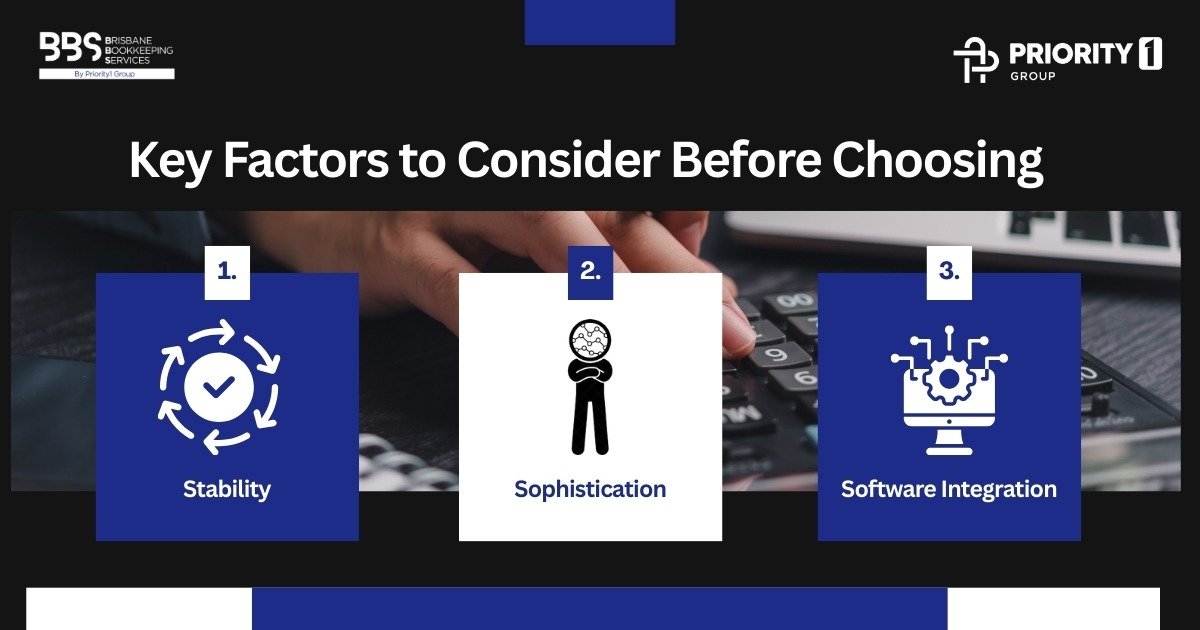
When evaluating these two paths, consider the following three “S” factors:
Navigating these financial nuances requires a partner who understands the local economic landscape. For instance, Brisbane Bookkeeping Services is a part of Priority1 Group, a firm dedicated to providing scalable financial solutions. By leveraging expert Bookkeepers Brisbane businesses can gain access to tailored advice that moves beyond mere number-crunching into the realm of business growth.
Different industries naturally gravitate toward different models based on their operational realities.
These businesses often have low transaction volumes but high-value entries. They may prefer hourly rates if their needs are minimal, or a low-tier fixed fee if they want regular monthly reporting to monitor their own billable hours and overhead.
With high volumes of daily transactions and complex inventory tracking, e-commerce businesses almost always benefit from a fixed-fee structure. The sheer volume of data makes hourly billing risky, as costs can spiral if there are integration errors between the online store and the accounting software.
Project-based businesses often find value in fixed fees that include project tracking or “job costing.” Knowing that the bookkeeping cost is a fixed overhead allows them to bake that cost directly into their project quotes with confidence.
The industry is shifting. Traditionally, bookkeeping was a reactive service, looking at what happened last month. Today, it is proactive. Modern firms use real-time data to help business owners make decisions today.
This shift is why many are moving toward fixed-fee arrangements. When a provider is invested in your long-term success, they act more like an internal finance department. If you are looking for Brisbane Bookkeeping Services, working with the team at Priority1 Group ensures that your financial records are handled with an emphasis on accuracy and strategic insight. Professional bookkeepers in Brisbane focus on ensuring that every entry serves a purpose, helping you understand where your money is going and how to keep more of it.
Once you have a preference, you need to vet your potential bookkeeper to ensure their billing aligns with your expectations.
Regardless of the model, transparency is the foundation of a good relationship with your financial partner. You should never be surprised by an invoice, and you should never be in the dark about the state of your ledger.
An hourly model requires the provider to be diligent about time-tracking and reporting. A fixed-fee model requires the provider to be clear about the boundaries of their service. If the communication is strong, either model can work successfully. However, the modern trend toward “Accounting as a Service” (AaaS) heavily favors the fixed-fee approach because it creates a partnership rather than a simple vendor-client relationship.
Feature | Hourly Rate | Fixed-Fee Package |
Budgeting | Variable/Unpredictable | Consistent/Predictable |
Best For | Startups/Irregular work | Established/Scaling businesses |
Relationship | Task-oriented | Result/Value-oriented |
Incentive | Paying for time spent | Paying for efficiency/accuracy |
Communication | May incur extra costs | Usually included in the monthly fee |
There is no “one size fits all” answer to the bookkeeping price debate. If your business is in its infancy with very few monthly transactions, an hourly rate provides the leanest start. However, as you scale and your time becomes your most valuable asset, the certainty and comprehensive nature of a fixed-fee model usually win out. It removes the stress of fluctuating bills and allows you to focus on what you do best: running your business.
Achieving this balance is easier with a trusted partner by your side. At Priority1 Group, we believe that financial clarity is the right of every business owner. Whether you are looking for specialized advice or day-to-day management, our team provides the expertise needed to keep your business moving forward. By choosing a professional path that offers both transparency and reliability, you ensure that your books aren’t just a record of the past, but a map for your future growth.